How to Set Up a Global Capability Center in India: A Step-by-Step Guide
India has emerged as a destination of strategic importance for global businesses to develop technology, research, finance, analytics and operational capabilities. Companies are setting up Global Capability Centers (GCCs) in India to tap into skilled talent, enhance business operations, promote creativity, and build long-term enterprise capabilities.
But, setting up GCC in India is more than simply hiring people and taking a lease of an office space. Businesses require a clear strategy, the right location, a suitable operating model, legal and financial planning, technology infrastructure and a scalable workforce.
This guide highlights the important steps that businesses need to consider before setting up a Global Capability Center in India and starting their operations.
What is a Global Capability Center (GCC)?
A Global Capability Center (GCC) is a company’s offshore or overseas business unit, established to support its global operations through specialized services, technology, innovation, and business functions.
Modern GCCs are not just performing routine back-office tasks. They are increasingly supporting software engineering, product development, financial operations, data analytics, artificial intelligence, research and development, cyber security and making strategic choices.
India’s GCC ecosystem has evolved as a major hub for enterprise capabilities with skilled professionals, technology infrastructure and a growing innovation ecosystem.
The latest report from the Government of India says GCCs are increasingly contributing to areas such as AI, software development, research, cybersecurity and analytics.
Reasons Why Companies Establish GCCs in India
- Get access to skilled professionals across technology and business capabilities.
- Assisting you to innovate and digitally transform.
- Greater control of business processes and capabilities.
- Opportunities to build specialist teams.
- Continuity of global service delivery and operation.
- Long-term enterprise capability building.
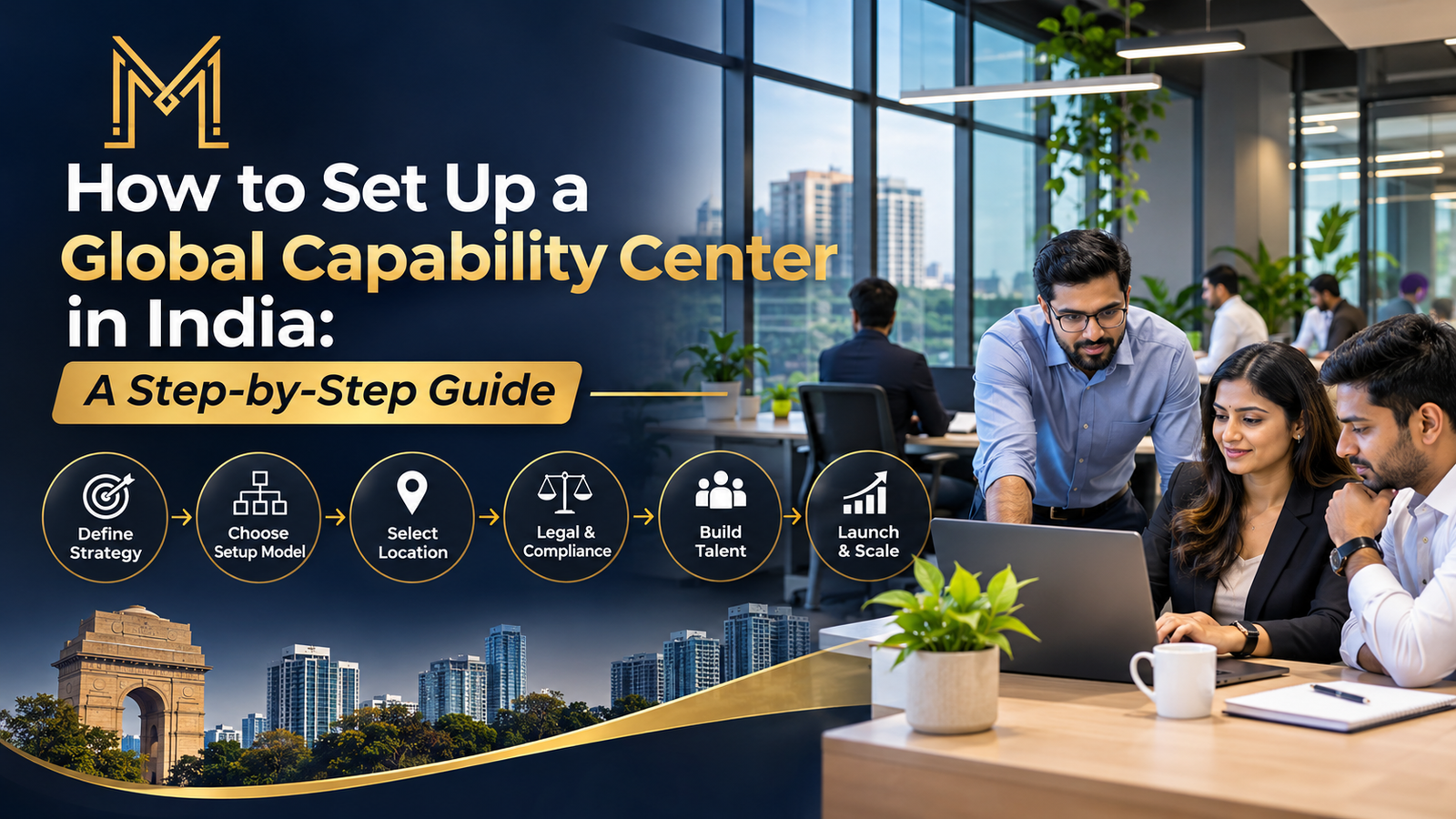
7 Steps to Set Up a Global Capability Center in India
Step 1: Define Your GCC Strategy and Business Goals
The first step in GCC setup in India is to understand why your organization wants to have a capability center.
Define precisely the functions the GCC will undertake, how it will support the parent organization and its responsibilities, before investing in infrastructure or hiring.
What Business Should Be Looking At:
- What business functions are going to India?
- Will the GCC support IT, finance, engineering, analytics or operations?
- What are the expected results for business?
- What is the initial work force?
- What are your long term plans for growth?
- What are the measures of success?
A well-defined GCC strategy helps companies avoid unnecessary costs and build a center that is aligned to business objectives.
Companies can start with a GCC readiness assessment and strategy advisory to assess business readiness, financial viability, operating structure and potential risks before committing to a setup.
Step 2: Select the Right GCC Setup Model
There is no GCC setup model that works for every organization. Businesses need to weigh the varying approaches in terms of ownership, control, timescales, investment requirements and operational responsibilities.
Common Patterns for Establishing a GCC Are:
GCC Held Hostage: The organization owns and establishes its capability center, which gives it greater control over employees, operations, technology and strategic direction.
Build-Operate-Transfer (BOT): A partner builds and runs the GCC and then transfers the established operation to the client organization on agreed terms.
Employer of Record (EOR): Companies utilize an EOR arrangement to hire employees under a local employment structure while assessing or developing their long-term operating model.
Managed GCC Services: A service partner provides agreed operational support, infrastructure, management or administration capabilities.
The choice of the right model may impact the timeline for the GCC setup, costs, flexibility and long-term ownership.
Step 3: Choose the Right Location in India
One of the most important decisions in GCC setup strategy is location selection. The right city should offer access to the right talent, infrastructure, business connectivity and a conducive operating environment.
GCCs Which Are Popular in India:
- Bangalore: Software engineering, technology, AI, product dev, research.
- Hyderabad: Technology, pharma, engineering & business operations.
- Pune: Engineering, IT, manufacturing and financial services.
- Chennai: Manufacturing, technology, engineering, & shared services.
- Mumbai: Financial services, BFSI and corporate operations.
- Gurugram: Consulting, technology, financial services and enterprise business operations.
- Noida: IT services / technology / digital operations & business services.
The ideal location for a GCC is determined by the organization's business functions, hiring needs, infrastructure requirements, budget, and expansion plans.
Before finalizing a location, businesses should consider talent availability, real estate, connectivity, local policies, infrastructure and long-term scalability.
Step 4: Establish the Legal, Financial and Compliance Framework
Setting up a Global Capability Center in India needs to have a well-laid plan for legal structure, taxation, employment, regulatory obligations and financial management.
Businesses should seek the advice of qualified legal, tax and compliance professionals to determine the most appropriate structure and obligations for their specific activities.
Areas of Assessment Include:
- Requirements for a business entity and its registration.
- If there are any rules about foreign investment.
- Planning of taxes and transfer pricing.
- Employment and labor law compliance.
- Legal and payroll requirements.
- Cyber security and data protection.
- Agreements between related companies.
- Industry-specific and regulatory requirements.
The GCC needs to set up the right legal and financial framework before it starts operating.
Step 5: Build the Infrastructure and Technology Environment
Once the strategy, setup model and location is decided, businesses will need to put in place the infrastructure required for their GCC operations.
Infrastructure planning should include physical workplace needs and digital systems.
Key Infrastructure Needs:
- Workplace design and office space.
- Information technology and network infrastructure.
- Enterprise and cloud technology systems.
- Cybersecurity and access management.
- Disaster Recovery and Business Continuity.
- Collaboration and communication tools.
- Data management and reporting systems.
IT infrastructure needs to be built on the basis of what the GCC actually does, rather than just cloning what the parent company has.
The GCC’s foundation can also be augmented with AI capabilities through automation, analytics, AI engineering teams and dedicated innovation initiatives.
Step 6: Attract the Appropriate Talent and Leadership Team
One of the biggest priorities while setting up a GCC in India is talent acquisition.
Businesses must figure out the right leadership setup, hiring strategy, workforce plan, and employee development strategy.
Initial Recruitment Plan May Include:
- GCC Site Lead or Head.
- Technology & Engineering Leaders.
- Operations & Finance Managers.
- HR and Talent Acquisition Teams.
- IT & Infrastructure Specialists.
- Functional Experts.
- Business Analysts & Project Managers.
Recruitment should be guided by the operating model and phased growth plan of the GCC.
Businesses should also focus on employee onboarding, training, performance management, leadership development, cultural integration and retention for building a sustainable workforce.
Step 7: Launch, Operate and Scale Your GCC
Launching the GCC is not the end. Businesses require a structured operational framework for performance, accountability and continuous improvement.
Organizations Should Monitor After Launch:
- Conduct of operations and provision of services.
- Staff recruitment and output.
- Performance of the finances.
- Employee retention and engagement.
- Cybersecurity and Technology.
- The process efficiency.
- Alignment of business.
- Capacity development and growth.
As the GCC matures, it can gradually expand into other functions, advanced technology capabilities, AI initiatives and strategic enterprise responsibilities.
A scalable GCC operating model enables organizations to grow without losing control of quality, governance, culture or performance.
Key Challenges Businesses Must Consider Before Setting Up in the GCC
India is a huge opportunity to set up Global Capability Centers but companies need to be ready for challenges such as:
- Finding specialized talent is hard.
- Choosing the wrong location or mode of operation.
- Unanticipated setup and operating expenses.
- Complicated legal, tax and regulatory issues.
- Differences in culture and communication.
- Technology and cybersecurity hazards.
- Leadership and Governance issues.
- Managing growth and retaining staff.
But with early planning, clear governance and expert advice, businesses are better equipped to handle these challenges.
How MarSan Global Supports Companies in Establishing GCCs in India
MarSan Global supports organizations across the Global Capability Center lifecycle - from strategy planning and setup through to operations, transformation, expansion and optimization.
GCC Services Cover the Full Lifecycle:
- Strategy & Advisory: GCC readiness assessment, site selection strategy, financial modeling and operating model design.
- GCC Build & Launch: Entity setup, compliance support, infrastructure planning, and execution of Build-Operate-Transfer.
- GCC Operate & Run: Operations management, EOR, payroll, benefits and facilities management.
- GCC Transform: Vendor to captive migration, process re-engineering and change management.
- GCC Scale & Expand: Hiring leadership, workforce expansion, building AI/GenAI capabilities, and multi-site expansion.
- GCC Optimize: Performance benchmarking, cost optimization, maturity assessments and operational improvement.
The full-lifecycle approach allows businesses to plan their GCC journey in a coordinated framework, as opposed to managing multiple disconnected service providers.
Frequently Asked Questions
How to Set Up a GCC in India?
GCC Setup in India: Business objectives are defined, setup model is selected, location is identified, legal and financial framework is put in place, infrastructure is built, talent is hired and operational strategy is formulated.
What Does It Cost to Set Up a GCC in India?
The cost to establish GCCs will vary depending on the location, size of the workforce, business functions, office infrastructure, technology requirements, legal structure and operating model. Businesses need a financial model that covers setup costs, ongoing expenses and projected growth.
What's the Best Indian City to Set Up a GCC?
Popular GCC locations include Bangalore, Hyderabad, Pune, Chennai, Mumbai, Gurugram and Noida. The best city depends on talent requirements, infrastructure, industry focus, budget and business objectives.
What Is the Difference Between a GCC and a BPO?
A BPO typically delivers outsourced business processes as a service; whereas, a GCC is typically developed as an enterprise capability center for the global business of the parent organization. GCCs could have a more strategic ownership of specialized functions, technology, innovation and internal capabilities.
The BOT Model for GCC Establishment Is as Follows:
The Build-Operate-Transfer model is where a service partner sets up and operates a capability center, and subsequently transfers the capability center to the client organization as per the agreed transfer structure and terms.
How Much Time to Set Up a GCC in India?
Timeline depends on legal structure, hiring requirements, infrastructure, location, technology and operational complexity. Some GCC projects may be started in a few months while larger or more complex projects may take longer timelines.
Can GCCs in India Support AI and Digital Transformation?
Yes. Depending on the mandate and capabilities of a GCC, it can support AI engineering, data analytics, machine learning, research and development, automation, cybersecurity, product development and digital transformation.
Looking to Set Up Your Global Capability Center in India?
Building a GCC requires the right strategy, operating model, location, talent, infrastructure and a long term roadmap. Businesses can build a capability center in a structured manner, with alignment to their enterprise goals.
MarSan Global helps enterprises plan, build, operate, transform, scale and enhance their Global Capability Centers in India.
Begin with a strategy discussion to evaluate your GCC readiness, talk about suitable setup models and plan the next steps for your India expansion.
BOOK YOUR STRATEGY CALL WITH MARSAN GLOBAL
Grow your India capability with a partner that supports the entire lifecycle of GCC.